Recovery
Every chargeback, worked end to end
From the moment a dispute lands to the moment you see the outcome. Kloutit gathers the evidence, argues each case and keeps you in front of every deadline.
How it works

The case arrives
From all your PSPs, with nothing for you to do.

The evidence comes together
Collected automatically, or requested with a link.

The defence is generated
No templates, ready to submit in under a minute.

It gets submitted
On time and, if you want, automatically.

You see the outcome
For each case, and the total recovered.
The defence
Where the best defences come from
Kloutit does not fill in a template. Each case is argued by several specialists, from everything known about your business, your sector and the scheme that will read it.
Multi-agent technology
Several specialists work on the same case
They work in parallel, each looking at the dispute from a different angle and sharing what it finds as it goes. A final review turns all of it into one document, structured the way that scheme, issuer and PSP expect to read it.
These are some of the things they are experts at:

How your own business works
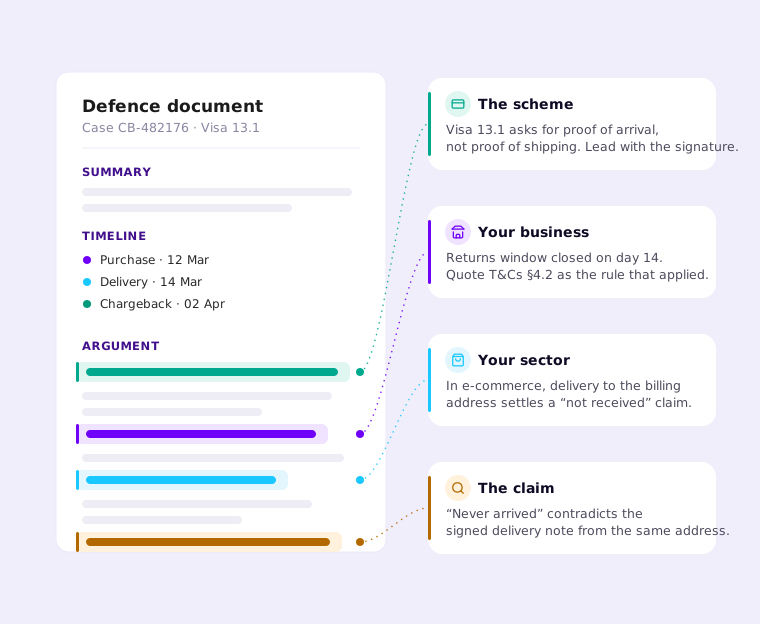
You define the context of your business once: your refund policy, your terms and conditions, your purchase flow and anything else that matters. From then on nothing gets attached wholesale. On each case, only the clauses that actually apply are the ones quoted.

How your sector works
Take travel, ecommerce, subscriptions, ticketing: every sector has its own vocabulary and its own standard for what counts as delivered. A no-show is not a non-delivery, and a defence that treats them the same loses.
What the scheme expects
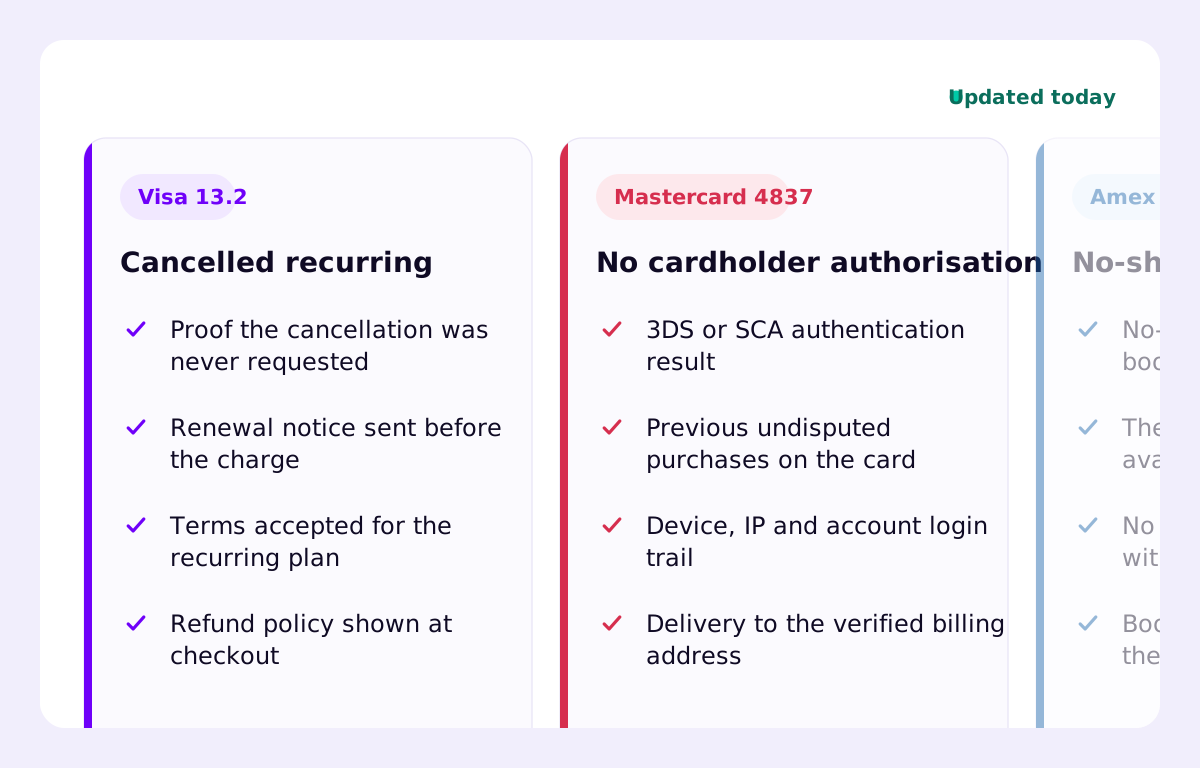
Every scheme wants the argument framed its own way and mapped to the right reason code, and their criteria keep changing. Keeping track of every update is a job in itself. Kloutit follows them, so a defence sent today complies today.

Any weakness in the claim
Inconsistencies in the cardholder's story, anti-fraud signals in the transaction, and the parts of the claim the evidence does not support. Every gap found is an argument you can use.
The defence document
A document that explains itself
A case usually opens with a summary and a timeline, then the argument, straight to the point and with no filler. Only what genuinely helps goes in: the evidence sits where it supports the point, and any extra annex is titled and comes with a line on why it matters. Whoever reviews it sees dozens a day, and one that is easy to read is harder to dismiss.


Accumulated knowledge
Kloutit has learned from every case it has defended
When you defend a case with Kloutit, you get the benefit of every chargeback handled before it. By the time a new dispute arrives, something like it has almost certainly been argued already. What Kloutit keeps is never the content of a case, only what holds up against a given reason code.
In numbers
Better defences, more money back
Up to
5.5x
more revenue recovered
On average
95%
less manual work
Built by a team that has spent
12 years
fighting chargebacks
Evidence
The work around the evidence, handled too
Writing the defence is one part of the job. The rest is chasing documents from people in other teams, sorting them, and typing the details in manually. Kloutit takes that on as well.
Evidence links
The proof usually sits with someone else
Finance gets the notification, but the delivery note sits with the warehouse or the check-in record with the front desk. Kloutit sends a secure link straight to whoever holds the proof, and they drop the files in: no account to create, nothing to learn, no chain of emails chasing them. Chargebacks stop being one team's problem.


Relevance
Kloutit knows which evidence carries weight
Kloutit weighs each one against what this case needs, keeps the evidence or the sections of it that will help win the case, and leaves out the rest. Send anything from the case you think might help. Knowing which document wins it is not your job.
Integrations
It plugs into whatever you already use
Every major PSP, and hundreds of the tools your evidence already lives in: shops, carriers, helpdesks, CRMs. Connecting one takes minutes and usually no development work, so the cases and the proof arrive on their own.
























Automation rules
If this, then that. No code involved
Build conditions on anything in the case: amount, reason code, PSP, carrier, 3DS, deadline. Chain as many as you need with AND and OR, and choose what happens when a case matches: generate the defence, submit it, or accept the chargeback.

Analytics
All the numbers, however you need to see them
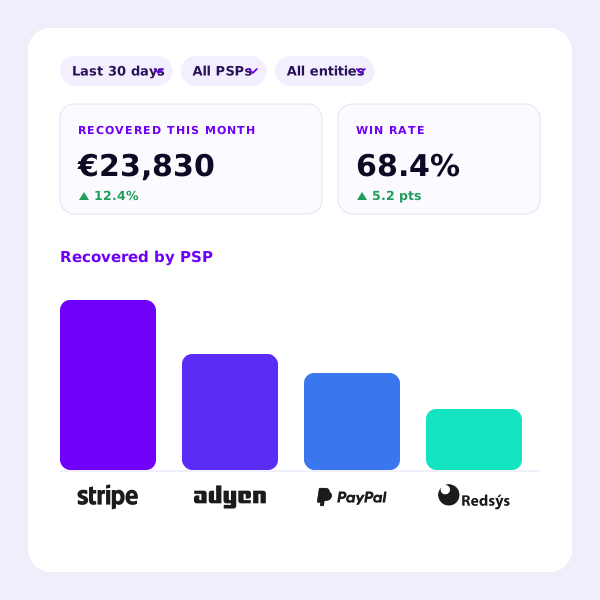
Claimed and recovered amounts, success rate by case and by amount, and how it all breaks down by reason code, card brand or status.
All your PSPs, one set of numbers
Kloutit brings chargebacks from every PSP and entity into the same figures, updated as they come in. No four logins, no exports, no spreadsheet that is out of date the moment you save it.
Build the dashboard you actually need
Or just ask
Security and compliance
Your data, handled properly
Independently certified, encrypted throughout, and stored inside the EU.
ISO/IEC 27001 certified
An information security management system audited by an independent body, not a self-assessment.
GDPR compliant, data in the EU
Stored in Ireland, and on request we restrict processing to the EU entirely.
Never used to train models
Your data exists to build and submit your defences. Not for marketing, not for analysis, not for sale.
Encrypted and accountable
AES-256 at rest, TLS in transit, and immutable records of every access to your data.
Two ways to run it
Now choose who does the work
Everything you have just seen is exactly the same in both. The only thing that changes is who runs it.
Recovery Self-managed
Your team runs the operation, with the repetitive part gone. You set the rules and you decide what gets sent.
Recovery Outsourced
Kloutit's experts run it end to end. You get the outcomes and the visibility, without the work.
COMPANIES THAT TRUST KLOUTIT
Recovery
Every chargeback, worked end to end
From the moment a dispute lands to the moment you see the outcome. Kloutit gathers the evidence, argues each case and keeps you in front of every deadline.
How it works
The case arrives
From all your PSPs, with nothing for you to do.
The evidence comes together
Collected automatically, or requested with a link.
The defence is generated
No templates, ready to submit in under a minute.
It gets submitted
On time and, if you want, automatically.
You see the outcome
For each case, and the total recovered.
The defence
Where the best defences come from
Kloutit does not fill in a template. Each case is argued by several specialists, from everything known about your business, your sector and the scheme that will read it.
Multi-agent technology
Several specialists work on the same case
They work in parallel, each looking at the dispute from a different angle and sharing what it finds as it goes. A final review turns all of it into one document, structured the way that scheme, issuer and PSP expect to read it.
These are some of the things they are experts at:
How your own business works
You define the context of your business once: your refund policy, your terms and conditions, your purchase flow and anything else that matters. From then on nothing gets attached wholesale. On each case, only the clauses that actually apply are the ones quoted.
How your sector works
Take travel, ecommerce, subscriptions, ticketing: every sector has its own vocabulary and its own standard for what counts as delivered. A no-show is not a non-delivery, and a defence that treats them the same loses.
What the scheme expects
Every scheme wants the argument framed its own way and mapped to the right reason code, and their criteria keep changing. Keeping track of every update is a job in itself. Kloutit follows them, so a defence sent today complies today.
Any weakness in the claim
Inconsistencies in the cardholder's story, anti-fraud signals in the transaction, and the parts of the claim the evidence does not support. Every gap found is an argument you can use.
The defence document
A document that explains itself
A case usually opens with a summary and a timeline, then the argument, straight to the point and with no filler. Only what genuinely helps goes in: the evidence sits where it supports the point, and any extra annex is titled and comes with a line on why it matters. Whoever reviews it sees dozens a day, and one that is easy to read is harder to dismiss.
Accumulated knowledge
Kloutit has learned from every case it has defended
When you defend a case with Kloutit, you get the benefit of every chargeback handled before it. By the time a new dispute arrives, something like it has almost certainly been argued already. What Kloutit keeps is never the content of a case, only what holds up against a given reason code.
In numbers
Better defences, more money back
Up to
5.5x
more revenue recovered
On average
95%
less manual work
Built by a team that has spent
12 years
fighting chargebacks
Evidence
The work around the evidence, handled too
Writing the defence is one part of the job. The rest is chasing documents from people in other teams, sorting them, and typing the details in manually. Kloutit takes that on as well.
Evidence links
The proof usually sits with someone else
Finance gets the notification, but the delivery note sits with the warehouse or the check-in record with the front desk. Kloutit sends a secure link straight to whoever holds the proof, and they drop the files in: no account to create, nothing to learn, no chain of emails chasing them. Chargebacks stop being one team's problem.
Relevance
Kloutit knows which evidence carries weight
Kloutit weighs each one against what this case needs, keeps the evidence or the sections of it that will help win the case, and leaves out the rest. Send anything from the case you think might help. Knowing which document wins it is not your job.
Integrations
It plugs into whatever you already use
Every major PSP, and hundreds of the tools your evidence already lives in: shops, carriers, helpdesks, CRMs. Connecting one takes minutes and usually no development work, so the cases and the proof arrive on their own.
Automation rules
If this, then that. No code involved
Build conditions on anything in the case: amount, reason code, PSP, carrier, 3DS, deadline. Chain as many as you need with AND and OR, and choose what happens when a case matches: generate the defence, submit it, or accept the chargeback.
Analytics
All the numbers, however you need to see them
Claimed and recovered amounts, success rate by case and by amount, and how it all breaks down by reason code, card brand or status.
All your PSPs, one set of numbers
Kloutit brings chargebacks from every PSP and entity into the same figures, updated as they come in. No four logins, no exports, no spreadsheet that is out of date the moment you save it.
Build the dashboard you actually need
Or just ask
Security and compliance
Your data, handled properly
Independently certified, encrypted throughout, and stored inside the EU.
ISO/IEC 27001 certified
An information security management system audited by an independent body, not a self-assessment.
GDPR compliant, data in the EU
Stored in Ireland, and on request we restrict processing to the EU entirely.
Never used to train models
Your data exists to build and submit your defences. Not for marketing, not for analysis, not for sale.
Encrypted and accountable
AES-256 at rest, TLS in transit, and immutable records of every access to your data.
Two ways to run it
Now choose who does the work
Everything you have just seen is exactly the same in both. The only thing that changes is who runs it.
Recovery Self-managed
Your team runs the operation, with the repetitive part gone. You set the rules and you decide what gets sent.
Recovery Outsourced
Kloutit's experts run it end to end. You get the outcomes and the visibility, without the work.
COMPANIES THAT TRUST KLOUTIT
Recovery
Every chargeback, worked end to end
From the moment a dispute lands to the moment you see the outcome. Kloutit gathers the evidence, argues each case and keeps you in front of every deadline.
How it works
The case arrives
From all your PSPs, with nothing for you to do.
The evidence comes together
Collected automatically, or requested with a link.
The defence is generated
No templates, ready to submit in under a minute.
It gets submitted
On time and, if you want, automatically.
You see the outcome
For each case, and the total recovered.
The defence
Where the best defences come from
Kloutit does not fill in a template. Each case is argued by several specialists, from everything known about your business, your sector and the scheme that will read it.
Multi-agent technology
Several specialists work on the same case
They work in parallel, each looking at the dispute from a different angle and sharing what it finds as it goes. A final review turns all of it into one document, structured the way that scheme, issuer and PSP expect to read it.
These are some of the things they are experts at:
How your own business works
You define the context of your business once: your refund policy, your terms and conditions, your purchase flow and anything else that matters. From then on nothing gets attached wholesale. On each case, only the clauses that actually apply are the ones quoted.
How your sector works
Take travel, ecommerce, subscriptions, ticketing: every sector has its own vocabulary and its own standard for what counts as delivered. A no-show is not a non-delivery, and a defence that treats them the same loses.
What the scheme expects
Every scheme wants the argument framed its own way and mapped to the right reason code, and their criteria keep changing. Keeping track of every update is a job in itself. Kloutit follows them, so a defence sent today complies today.
Any weakness in the claim
Inconsistencies in the cardholder's story, anti-fraud signals in the transaction, and the parts of the claim the evidence does not support. Every gap found is an argument you can use.
The defence document
A document that explains itself
A case usually opens with a summary and a timeline, then the argument, straight to the point and with no filler. Only what genuinely helps goes in: the evidence sits where it supports the point, and any extra annex is titled and comes with a line on why it matters. Whoever reviews it sees dozens a day, and one that is easy to read is harder to dismiss.
Accumulated knowledge
Kloutit has learned from every case it has defended
When you defend a case with Kloutit, you get the benefit of every chargeback handled before it. By the time a new dispute arrives, something like it has almost certainly been argued already. What Kloutit keeps is never the content of a case, only what holds up against a given reason code.
In numbers
Better defences, more money back
Up to
5.5x
more revenue recovered
On average
95%
less manual work
Built by a team that has spent
12 years
fighting chargebacks
Evidence
The work around the evidence, handled too
Writing the defence is one part of the job. The rest is chasing documents from people in other teams, sorting them, and typing the details in manually. Kloutit takes that on as well.
Evidence links
The proof usually sits with someone else
Finance gets the notification, but the delivery note sits with the warehouse or the check-in record with the front desk. Kloutit sends a secure link straight to whoever holds the proof, and they drop the files in: no account to create, nothing to learn, no chain of emails chasing them. Chargebacks stop being one team's problem.
Relevance
Kloutit knows which evidence carries weight
Kloutit weighs each one against what this case needs, keeps the evidence or the sections of it that will help win the case, and leaves out the rest. Send anything from the case you think might help. Knowing which document wins it is not your job.
Integrations
It plugs into whatever you already use
Every major PSP, and hundreds of the tools your evidence already lives in: shops, carriers, helpdesks, CRMs. Connecting one takes minutes and usually no development work, so the cases and the proof arrive on their own.
Automation rules
If this, then that. No code involved
Build conditions on anything in the case: amount, reason code, PSP, carrier, 3DS, deadline. Chain as many as you need with AND and OR, and choose what happens when a case matches: generate the defence, submit it, or accept the chargeback.
Analytics
All the numbers, however you need to see them
Claimed and recovered amounts, success rate by case and by amount, and how it all breaks down by reason code, card brand or status.
All your PSPs, one set of numbers
Kloutit brings chargebacks from every PSP and entity into the same figures, updated as they come in. No four logins, no exports, no spreadsheet that is out of date the moment you save it.
Build the dashboard you actually need
Or just ask
Security and compliance
Your data, handled properly
Independently certified, encrypted throughout, and stored inside the EU.
ISO/IEC 27001 certified
An information security management system audited by an independent body, not a self-assessment.
GDPR compliant, data in the EU
Stored in Ireland, and on request we restrict processing to the EU entirely.
Never used to train models
Your data exists to build and submit your defences. Not for marketing, not for analysis, not for sale.
Encrypted and accountable
AES-256 at rest, TLS in transit, and immutable records of every access to your data.
Two ways to run it
Now choose who does the work
Everything you have just seen is exactly the same in both. The only thing that changes is who runs it.
Recovery Self-managed
Your team runs the operation, with the repetitive part gone. You set the rules and you decide what gets sent.
Recovery Outsourced
Kloutit's experts run it end to end. You get the outcomes and the visibility, without the work.
COMPANIES THAT TRUST KLOUTIT
Recovery
Every chargeback, worked end to end
From the moment a dispute lands to the moment you see the outcome. Kloutit gathers the evidence, argues each case and keeps you in front of every deadline.
How it works
The case arrives
From all your PSPs, with nothing for you to do.
The evidence comes together
Collected automatically, or requested with a link.
The defence is generated
No templates, ready to submit in under a minute.
It gets submitted
On time and, if you want, automatically.
You see the outcome
For each case, and the total recovered.
The defence
Where the best defences come from
Kloutit does not fill in a template. Each case is argued by several specialists, from everything known about your business, your sector and the scheme that will read it.
Multi-agent technology
Several specialists work on the same case
They work in parallel, each looking at the dispute from a different angle and sharing what it finds as it goes. A final review turns all of it into one document, structured the way that scheme, issuer and PSP expect to read it.
These are some of the things they are experts at:
How your own business works
You define the context of your business once: your refund policy, your terms and conditions, your purchase flow and anything else that matters. From then on nothing gets attached wholesale. On each case, only the clauses that actually apply are the ones quoted.
How your sector works
Take travel, ecommerce, subscriptions, ticketing: every sector has its own vocabulary and its own standard for what counts as delivered. A no-show is not a non-delivery, and a defence that treats them the same loses.
What the scheme expects
Every scheme wants the argument framed its own way and mapped to the right reason code, and their criteria keep changing. Keeping track of every update is a job in itself. Kloutit follows them, so a defence sent today complies today.
Any weakness in the claim
Inconsistencies in the cardholder's story, anti-fraud signals in the transaction, and the parts of the claim the evidence does not support. Every gap found is an argument you can use.
The defence document
A document that explains itself
A case usually opens with a summary and a timeline, then the argument, straight to the point and with no filler. Only what genuinely helps goes in: the evidence sits where it supports the point, and any extra annex is titled and comes with a line on why it matters. Whoever reviews it sees dozens a day, and one that is easy to read is harder to dismiss.
Accumulated knowledge
Kloutit has learned from every case it has defended
When you defend a case with Kloutit, you get the benefit of every chargeback handled before it. By the time a new dispute arrives, something like it has almost certainly been argued already. What Kloutit keeps is never the content of a case, only what holds up against a given reason code.
In numbers
Better defences, more money back
Up to
5.5x
more revenue recovered
On average
95%
less manual work
Built by a team that has spent
12 years
fighting chargebacks
Evidence
The work around the evidence, handled too
Writing the defence is one part of the job. The rest is chasing documents from people in other teams, sorting them, and typing the details in manually. Kloutit takes that on as well.
Evidence links
The proof usually sits with someone else
Finance gets the notification, but the delivery note sits with the warehouse or the check-in record with the front desk. Kloutit sends a secure link straight to whoever holds the proof, and they drop the files in: no account to create, nothing to learn, no chain of emails chasing them. Chargebacks stop being one team's problem.
Relevance
Kloutit knows which evidence carries weight
Kloutit weighs each one against what this case needs, keeps the evidence or the sections of it that will help win the case, and leaves out the rest. Send anything from the case you think might help. Knowing which document wins it is not your job.
Integrations
It plugs into whatever you already use
Every major PSP, and hundreds of the tools your evidence already lives in: shops, carriers, helpdesks, CRMs. Connecting one takes minutes and usually no development work, so the cases and the proof arrive on their own.
Automation rules
If this, then that. No code involved
Build conditions on anything in the case: amount, reason code, PSP, carrier, 3DS, deadline. Chain as many as you need with AND and OR, and choose what happens when a case matches: generate the defence, submit it, or accept the chargeback.
Analytics
All the numbers, however you need to see them
Claimed and recovered amounts, success rate by case and by amount, and how it all breaks down by reason code, card brand or status.
All your PSPs, one set of numbers
Kloutit brings chargebacks from every PSP and entity into the same figures, updated as they come in. No four logins, no exports, no spreadsheet that is out of date the moment you save it.
Build the dashboard you actually need
Or just ask

Security and compliance
Your data, handled properly
Independently certified, encrypted throughout, and stored inside the EU.
ISO/IEC 27001 certified
An information security management system audited by an independent body, not a self-assessment.
GDPR compliant, data in the EU
Stored in Ireland, and on request we restrict processing to the EU entirely.
Never used to train models
Your data exists to build and submit your defences. Not for marketing, not for analysis, not for sale.
Encrypted and accountable
AES-256 at rest, TLS in transit, and immutable records of every access to your data.
Two ways to run it
Now choose who does the work
Everything you have just seen is exactly the same in both. The only thing that changes is who runs it.
Recovery Self-managed
Your team runs the operation, with the repetitive part gone. You set the rules and you decide what gets sent.
Recovery Outsourced
Kloutit's experts run it end to end. You get the outcomes and the visibility, without the work.
COMPANIES THAT TRUST KLOUTIT