Blog
News
Friendly fraud: the silent enemy of ecommerce
Learn what friendly fraud is, how it affects your ecommerce business, and what strategies you can implement to prevent it and fight back effectively.
Júlia Rius
Learn what friendly fraud is, how it affects your ecommerce business, and what strategies you can implement to prevent it and fight back effectively.
Introduction
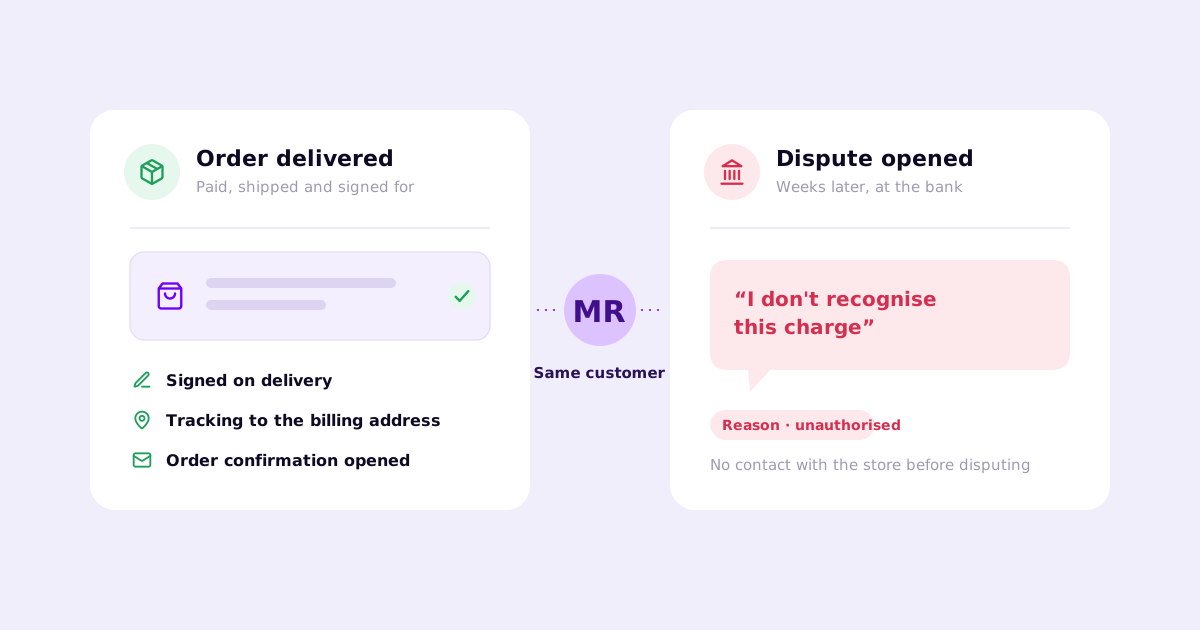
Your online store received an order. You processed it, shipped it… and a few weeks later, you get a chargeback notice. But the customer did make the purchase. What happened?
Welcome to the world of friendly fraud, one of the most frustrating and increasingly common threats in ecommerce. In this guide, we'll explain what it is, why it's so hard to detect, and how to protect your business from it.
What is friendly fraud?
Friendly fraud happens when a customer makes a legitimate purchase and then disputes the charge with their bank, claiming it was unauthorized or that they didn't receive the product or service.
It's called "friendly" because the buyer is not a professional fraudster — but the impact on your business is just as damaging as real fraud.
Common examples include:
The cardholder forgot about the purchase.
A family member used the card without informing them.
The customer changed their mind and didn't want to go through the return process.
In more serious cases, the customer intentionally tries to keep the product without paying.
Why is friendly fraud so dangerous?
Unlike traditional fraud, friendly fraud is harder to prevent because:
The transaction appears legitimate and authorized.
The dispute is initiated by the actual cardholder, not a criminal.
Many banks and card networks tend to side with the consumer if the merchant lacks clear evidence.
This can lead to:
Loss of revenue and product.
Additional chargeback fees and penalties.
Damage to your dispute ratio, which could affect your payment processing terms.
How to identify friendly fraud
Friendly fraud is often disguised as a valid dispute, but you might notice red flags such as:
The customer has purchased before but suddenly files a dispute.
High-value orders or digital products are involved (less traceable).
The customer never contacted you before disputing.
There's a pattern of returns or disputes in their history.
Tools like Kloutit use AI to detect suspicious behaviors and help you proactively respond to these types of disputes.
How to prevent friendly fraud
1. Strengthen post-sale communication
Send detailed order confirmations and shipping updates with tracking info.
Use a clear billing descriptor (so your business name appears correctly on the card statement).
Offer proactive and responsive customer support.
2. Keep thorough documentation
Store IP addresses, timestamps, order details, and any customer interactions (email, chat, etc.).
Make sure your terms and conditions are easy to find and explicitly accepted at checkout.
3. Add extra layers of verification
Use 3D Secure authentication.
Enable AVS (Address Verification System).
Cross-check shipping and billing details, especially on high-ticket items.
4. Respond quickly to chargebacks
Never let a case expire without response.
Gather all evidence early and submit it within the required window.
How to fight a chargeback caused by friendly fraud
Success lies in presenting solid, organized evidence that proves:
The customer authorized the transaction (IP, device ID, name, etc.).
The product or service was delivered as promised.
The customer agreed to your terms and refund policies.
If you're unsure how to structure your case, our automated platform at Kloutit builds and submits professional responses tailored to the payment network's requirements.
Conclusion
Friendly fraud is a silent and growing threat to ecommerce. But with the right prevention tactics, strong documentation, and quick response, you can significantly reduce its impact.
Automate your chargeback defense with Kloutit and focus on what matters most: growing your business.
Júlia Rius
Share