Blog
News
How Airlines Can Reduce Chargebacks After Flight Cancellations
Flight cancellations are an unavoidable reality in the airline industry. Operational disruptions, weather conditions, strikes, or geopolitical events can trigger mass cancellations within hours.
Yara Yoldi
Flight cancellations are an unavoidable reality in the airline industry. Operational disruptions, weather conditions, strikes, or geopolitical events can trigger mass cancellations within hours.
When this happens, the immediate focus is usually on operational response: re-accommodating passengers, managing customer support, and processing refunds. However, there is a less visible consequence that payments and fraud teams know all too well: a sudden increase in chargebacks initiated by passengers through their issuing banks.
For airlines processing high volumes of transactions, even a small increase in disputes can significantly impact the chargeback ratios monitored by card networks. That's why understanding how these disputes arise—and how to reduce them—is critical for airline payments teams.
Why flight cancellations generate so many chargebacks
From the passenger's perspective, initiating a chargeback is often the fastest way to recover their money when the refund process appears uncertain or slow.
From the airline's perspective, however, most of these cases are not true fraud. Instead, they typically stem from operational friction that emerges during large-scale cancellations. Common triggers include:
Refund processes that don't scale well during mass cancellations
Lack of visibility for passengers regarding refund status
Confusion between vouchers, rebookings, and refunds
The involvement of OTAs or agencies that complicates communication with the end customer
When passengers believe the refund process will take too long, the issuing bank becomes the quickest path to recover their funds.
This leads to a common situation in the airline sector: many chargebacks categorized as fraud are actually disputes driven by friction in refund processes.
The real impact of chargebacks on airlines
For airlines processing millions of transactions each year, chargebacks are far more than simple refunds. Each dispute can involve:
Loss of the transaction amount
Acquiring bank fees
Operational costs associated with dispute management
An increase in the dispute ratio monitored by Visa and Mastercard
Card networks set clear thresholds to monitor merchants with elevated dispute levels. Programs such as the Visa Monitoring Program or Mastercard Excessive Chargeback Program can be triggered when those thresholds are exceeded.
In the airline context—where transaction volumes are extremely high—a spike in disputes following mass cancellations can significantly affect these ratios across multiple billing cycles.
Key metrics airline payments teams should monitor
Fraud and payments teams in airlines typically monitor several indicators to identify risks before they escalate. The most relevant include:
Chargeback ratio (disputes divided by total transactions)
Refund-to-chargeback ratio
Average refund processing time
Disputes initiated while refunds are already in progress
Disputes linked to operational events (for example, mass cancellations)
One of the most common issues during large cancellation events is that passengers file disputes while the refund is already being processed, creating completely avoidable chargebacks.
Monitoring these indicators helps teams quickly detect when an operational disruption begins translating into increased dispute activity.
Most common dispute reasons after flight cancellations
After flight cancellations, chargebacks often appear under dispute codes such as:
Service Not Rendered / Merchandise Not Received
Cancelled Service
No Show / Cancelled Transaction
Fraud – Card Not Present Environment
Although many cases appear under fraud-related codes, in practice they are often disputes caused by unclear or slow refund processes.
Understanding which dispute codes appear most frequently helps payments teams optimize the evidence submitted and improve recovery rates.
How airlines can reduce chargebacks after cancellations
Reducing disputes after cancellations requires improving several parts of the payment and refund process.
1. Clearly communicate passenger options
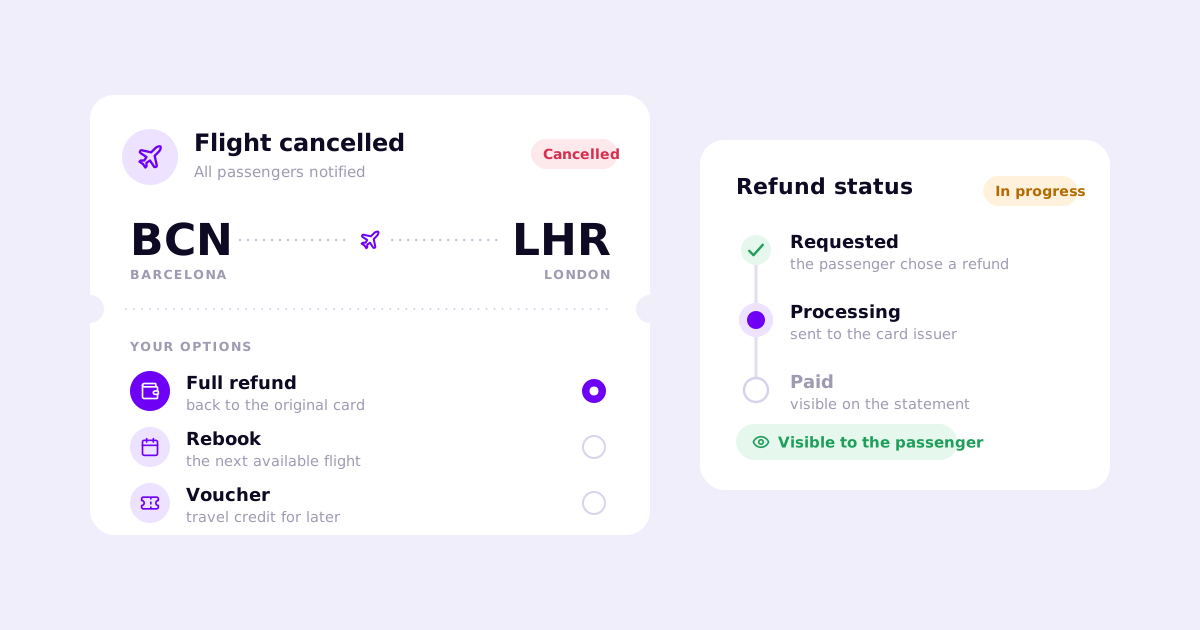
When a flight is cancelled, passengers typically have several options:
Full refund
Flight rebooking
Voucher or travel credit
If these options are not communicated clearly, passengers may assume recovering their money will be difficult.
Airlines that successfully reduce disputes often work closely with customer experience teams to ensure resolution options are communicated clearly and consistently across all channels.
2. Reduce friction in refund processes
One of the biggest triggers of disputes is the gap between perceived refund delays and actual refund processing times. When passengers lack visibility into the process, their issuing bank becomes the easiest alternative.
Airlines that reduce disputes typically implement:
Automated refund workflows
Clear confirmations of the refund process
Automatic updates on refund status
3. Properly manage payments through intermediaries
A significant portion of airline tickets are sold through OTAs, agencies, or GDS platforms. This can create additional friction when:
The passenger requests a refund from the OTA
The OTA redirects the customer to the airline
The passenger initiates a chargeback with their bank
As a result, many airlines develop coordinated processes with intermediaries to manage cancellations and refunds more efficiently.
4. Detect disputes before they become chargebacks
Another effective way to reduce disputes is to intervene before they escalate into formal chargebacks. Many airlines rely on tools within the card network ecosystem to identify disputes early.
Solutions like Visa Rapid Dispute Resolution (RDR) allow certain disputes to be resolved automatically through predefined rules, preventing them from escalating into full chargeback processes. Meanwhile, Ethoca alerts notify merchants when an issuing bank identifies a potential dispute, providing a window to issue a refund or contact the customer before the case progresses.
Integrating these tools helps airlines reduce dispute volumes and protect their card network dispute ratios.
5. Optimize chargeback defense
When a chargeback has already been initiated, the quality of the evidence submitted becomes critical. For airlines, the most effective documentation typically includes:
Booking confirmation
Terms and conditions accepted by the passenger
History of flight changes or cancellations
Communication with the passenger
Evidence of the applicable refund policy
Submitting structured and consistent responses can significantly improve recovery rates.
Preparing for dispute spikes
Mass cancellations can generate large spikes in disputes within just a few days. In these situations, manual processes quickly become a bottleneck for fraud and payments teams.
Airlines that handle these spikes most effectively often rely on:
Automated dispute workflows
Centralized evidence management
Case management tools designed to scale
This enables teams to manage large volumes of disputes without increasing operational workload.
Conclusion
Flight cancellations are inevitable in the airline industry. But the chargebacks that follow them do not have to become a constant source of loss.
A combination of efficient refund processes, clear visibility for passengers, and professional dispute management can significantly reduce the number of disputes initiated by customers.
For airlines operating at scale, having specialized tools and structured processes for dispute management is essential to protect revenue and maintain healthy dispute ratios.
At Kloutit, we work with payments and fraud teams in the travel industry to automate dispute management, improve recovery rates, and protect chargeback ratios with card networks.
If your airline is reviewing its dispute management strategy or looking to reduce the impact of chargebacks after cancellations, we would be happy to analyze your case.
Yara Yoldi
Share